
Enceladus
 At a Glance
Outer Worlds Commonwealth (2122);
Bright Thinktank (2125)
Eilat Hub- 7,532
Eilat Anchorage- 9,873
Unincorporated- 476
Meritocratic Anarcho-Communism
Enceladan Commonality
Parliamentary Judiciary with Petition (OWC
Seven rotating qualified Colonial Justices
Proctors (keep protocol and ethics)
Facilitators (guide the debate process)
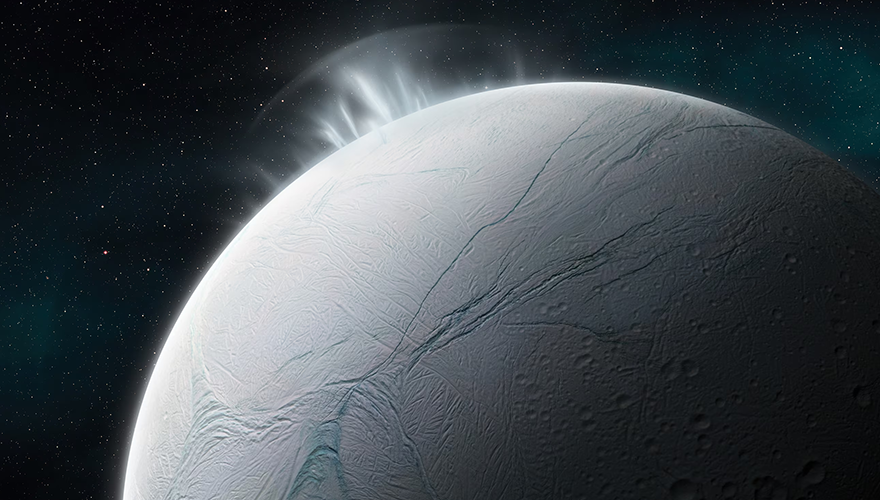
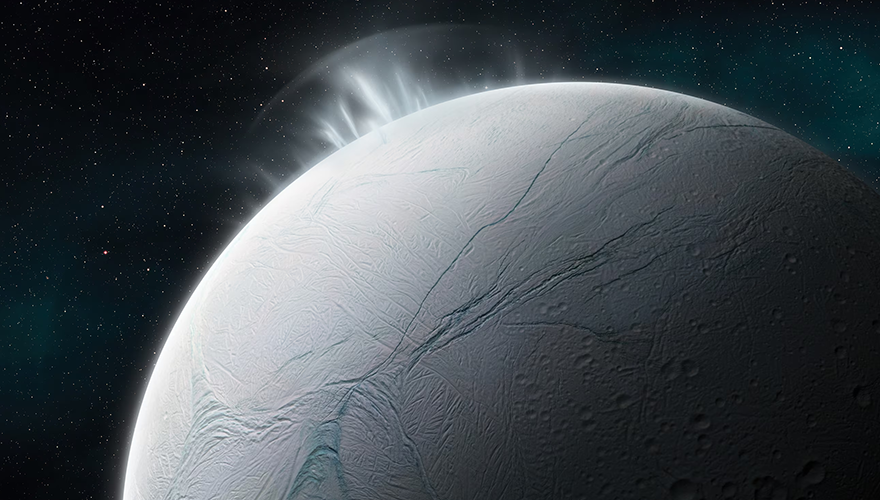
Designated Saturn II by the Federation's official Catalog of Astronomical Bodies, Enceladus is one of the most reflective bodies in the Sol System. It is a small moon- the sixth largest of Saturn's 141 moons- and the 18th largest in Sol. The moon has an equatorial diameter of 513 kilometers. The moon boasts two principle colonies and several unincorporated "bathyscaphe" habitats which are part of the Federation Science Council. All are member polities of the Outer Worlds Commonwealth and are part of the Saturn Bloc.
Enceladus is comprised of an ice crust between twenty-five and forty kilometers thick, with a very tenuous atmosphere of water vapor and a few other volatiles. The glacial crust covers an equatorial and subtropical zone "global ocean" while the northern and southern temperate zones form super-caverns filled with slushy and liquid water trapped inside icy warrens. The polar zones are unstable and have combinations of free water and a thinner ice cover. These areas are cryovolcanic.
Where Enceladus has global oceans, these bodies can be as deep as fifteen kilometers. Beneath the ocean zone is a solid core made of silica, carbon and trace amounts of metals.
Along with Europa and Titan, Enceladus was an early contender for theoretical life independent of evolution on Earth. Confirmation would not take place until after World War III, though circumstantial evidence was discovered by the Cassini probe starting in 2005 CE. Enceladus has a rich if primitive biodiversity.
Stellar Cartography
Located in Sol System in Sector 001, Enceladus is the sixth smallest and second closest moon of Saturn. It is located in the bright, outermost "E-Ring" of Saturn's orbital space and is the genesis that creates this ring. Enceladus is between Mimas (Saturn I) and Tethys (Saturn III); both are dead bodies of ice and rock. Enceladus orbits at about 180,000 kilometers from Saturn's upper atmosphere.
Planetary (Moon) Classification
Enceladus is a Variant Class F Jovian Satellite. Its achieved hydrostatic equilibrium and differentiation of its composition, but it is quite small, is an oblong spheroid and does not qualify for Dwarf Planet status (it does not orbit its star on its own path). It is part of the inner Saturn system and within Saturn's rings. Class F bodies are defined as:
- Possess non-Minshara class atmospheres or no atmosphere at all.
- The primary terrain is some form of ice- water ice, methane or ammonia ice, or frozen gases
- It must have accomplished hydrostatic equilibrium (round, spheroid or ovoid)
- May or may not be subject to tidal forces (internal or external) or radioactive decay heating
- May be a carbon or silica-based body, or may be made of frozen volatiles and compounds
Tidal Locking
Enceladus is tidally locked to its parent planet Saturn, create a "sub-Saturn" pole and an "anti-Saturn" pole. Encedalus "bulges" around the equator toward Saturn and this bulging effect creates the tidal forces that keep Enceladus' composition partially liquid. The other moons in orbit also have pronounced effects on Enceladus- particularly Titan- and again keeps the interior of Enceladus dynamic.
Geology
Enceladus is a small moon that has little in common with a Minshara-class world. It is merely 513 kilometers at its equator. It achieved hydrostatic equilibrium in that it is spherical and it has differentiated between light molecules and heavier elements. The moon has an icy crust, a water mantle and a solid rocky core. The gravity of the nearby moons and its parent planet Saturn acting on Enceladus have profound effects on the small moon.
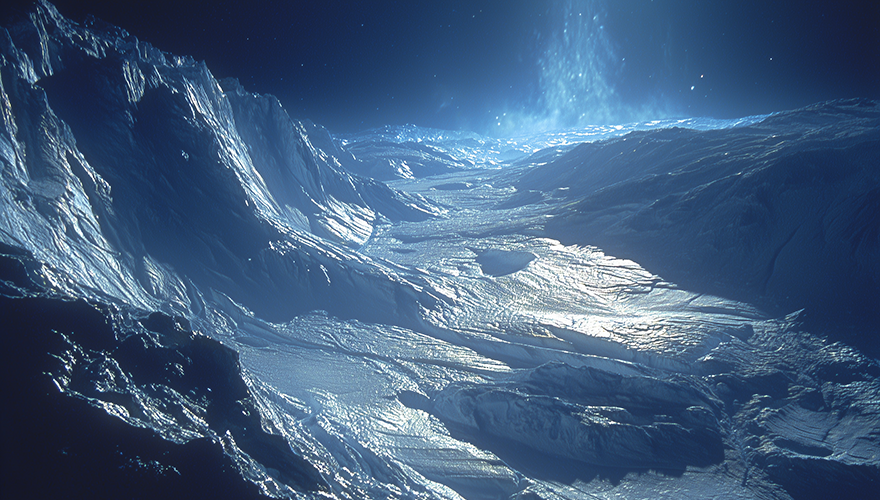
Almost none of Enceladus' surface is anything like a traditional world. But Enceladus is so cold that its ice is as hard- and as brittle- as granite. Gravitational effects and that brittleness, and the fact it is only tenuously anchored to the core via a sub-surface ocean, makes much of the surface a dangerous place. Enceladus is akin to an egg. Its crust can be easily cracked with a squeeze here and pressure there.
Sub-Saturn Bulge
Enceladus is not a sphere- it is an oblong ellipse. The intense gravity of Saturn creates a bulge that constantly faces Saturn's surface. The gravitational and thermal pressures of this bulge is what forms most of the Enceladan Tropical Ocean. The Anti-Saturn Pole- the side that never faces Saturn- is intermittently affected by Titan and other moons so it too has liquidity. This push and pull mechanic between the moons and Saturn is like a pulsing hand around the Enceladus "egg." These events keep its interior plastic, it generates cryovolcanism and convection within the oceans, if often prone to seismic shifts and unpredictable events.
Water Ice Shell
Enceladus is like an egg- it is covered in a crust of salty water ice between 30-45 kilometers in depth depending on the latitude. Unlike ice water on Earth, Enceladus' ice is as hard as granite. It has some occlusions, but not oxygen- usually its ammonia, ethane or methane.
Shiny White Marble
One of the strangest aspects of Enceladus by those who studied it early on is how smooth and uniform its surface is. While it has craters, it has nowhere near enough craters compared to its neighbors. The reason was shocking- Enceladus' current surface can be measured in thousands to scant millions of years, not billions of years. Enceladus is constantly renewing its surface with cryovolcanism- volcanic eruptions of pressurized and heated salt water. By modern reckoning, Enceladus loses about 200 kilograms of material to the E-Ring every day.
These geysers, found at both north and south poles, create "Enceladan snow" and they are the genesis of Saturn's E-Ring. This constant recycle of its crust is why Enceladus crust is so bright white- it is "new." It hasn't been extensively polluted by space dust or debris.
Cryovolcanoes
Enceladus experiences "cryovolcanism:" highly pressurized, heated water that breaks through Enceladus' ice shell. Similar to geysers, these eruptions spray water and organic compounds so high above Enceladus that some of it is left in orbit or in Saturn's E-Ring. These eruptions happen at the north and south poles where the "squeeze" of tidal forces on the moon's sides can find escape. These cryovolcanoes form the only kind of weather that Enceladus has.
"Snow" and Sand
It "snows" on Enceladus, the result of its polar cryovolcanism. Because Enceladus has less than three percent of Earth's gravity, the snow is quite small and floats down slowly. When examined, the snow is more like a pellet of sand than snow. Enceladus is so cold that the water freezes into a substance similar to rock.
As a result of Enceladan snow, most of the surface of the moon is covered in "ice sand" several centimeters deep. The sand can be subject to the gravity of Saturn and the other moons, and can "drift" into ridges and bands similar to small dunes. The snow is most common around the poles where it can be measured in meters, but is distributed in some form across the moon.
It is constantly snowing on Enceladus as the moon orbits pro-grade through Saturn's E-Ring. It also deposits "snow" in the E-Ring as it revolves around Saturn.
Plate Tectonics
Enceladus' structure has parallels to Earth's plate tectonics- a rigid surface and a plastic interior. But instead of deep core volcanism, Enceladus' crust and interior are affected by the gravitational pull of its parent planet and the other moons. The effects on the crust creates plates that grind and slip against one another. The plates do not move around the moon surface over geologic time in the same way as Earth's plates and are more static.
The plates on Enceladus can be forced to sub-duct under other plates, or may be subject to up-thrust, creating cliffs and plateaus on the surface.
Geography
Sluici: "Tiger Stripes"
Across Enceladus are smooth grooves and creases sometimes called tiger stripes. They are greatest in number at the north and south poles where they sometimes form lattices. They give Enceladus a wrinkled appearance. These "Sluici" (Sluices) are thin but precariously deep fissures in the ice. While they seal quickly, the constant ebbs and flows of seismic tidal forces makes these cracks.
The evidence of Sluici is akin to plate tectonics on Earth, albeit on a much smaller and more frequent scale. It is from these that cryovolcanoes spew organic icy sludge into space. And it is along these fractures that Enceladan scientists know to watch intently. They can be viewed as fault lines.
Labyrinthes: Canyons
Larger breaks in the surface ice that then refreeze might also be up-thrusted or partially sink. Whereas canyons on Earth are usually caused by plate separation or water erosion, on Enceladus they are part of the continuous process of fracturing from pressure from gravity.
Inter-Glacial Fissures and Caverns
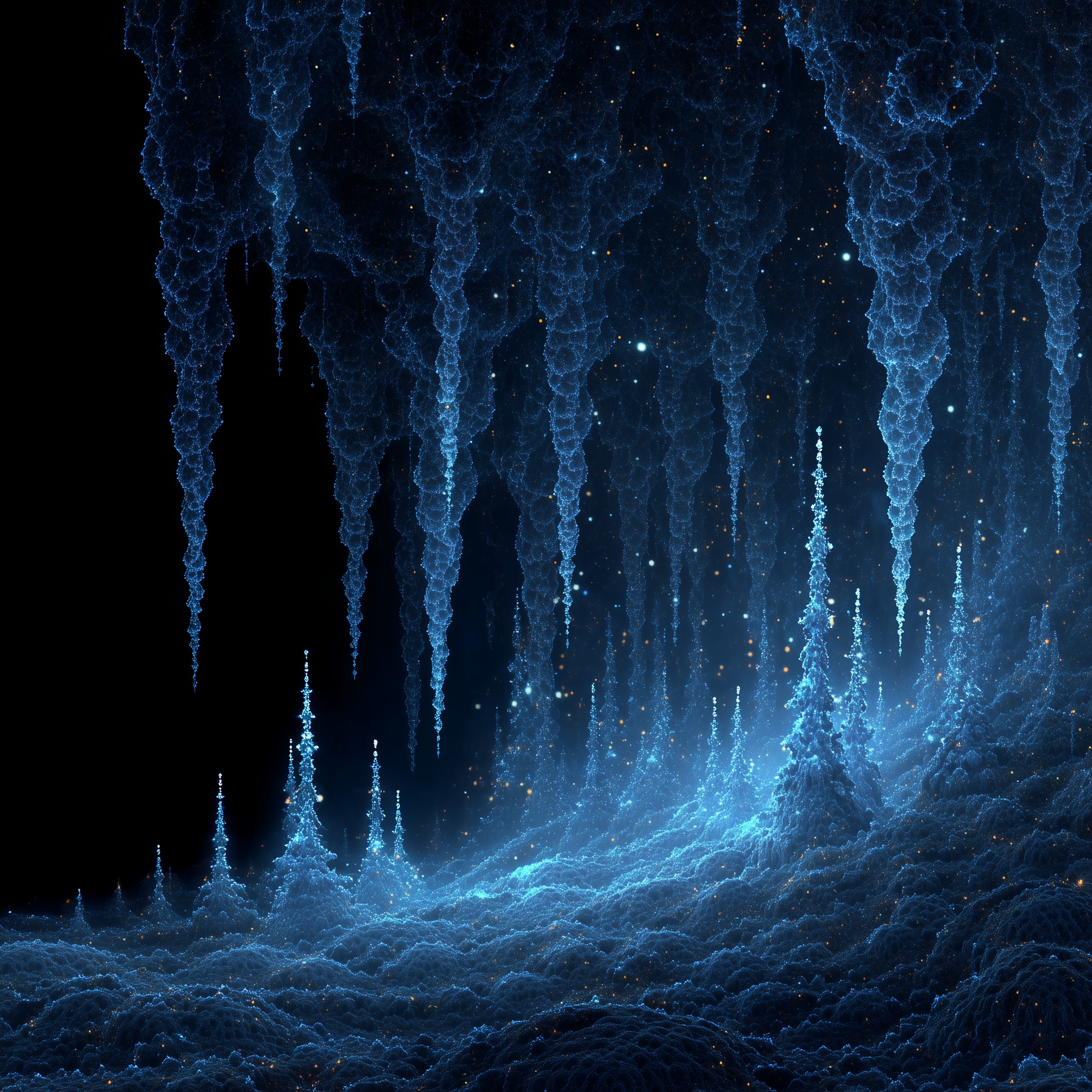
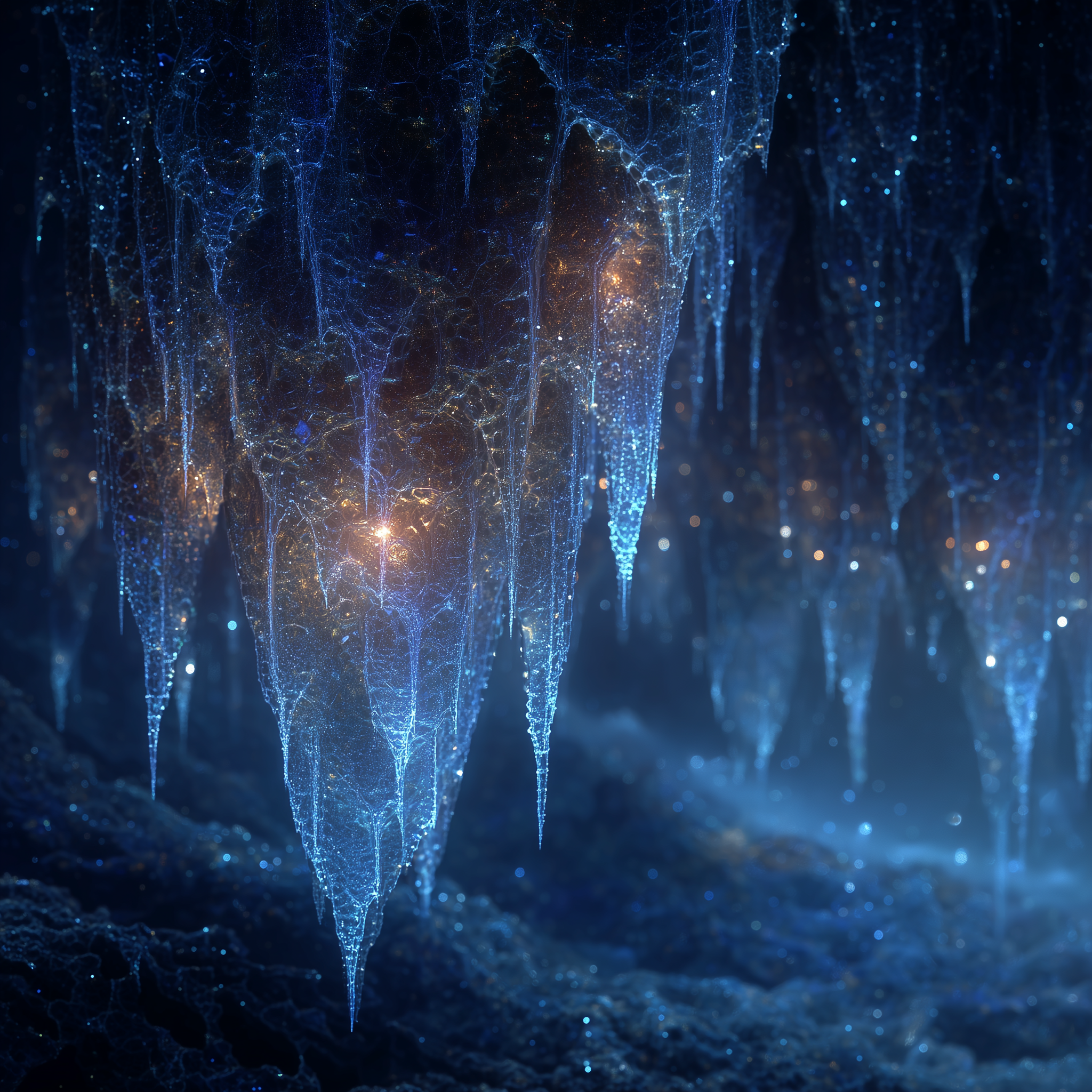
The ice crust on Enceladus is far from uniform and homogeneous. Particularly in the temperate and polar zones, portions of the ice- particularly areas subject to recent pressure- can be fissured, or even form something similar to a honeycomb. These cells are sometimes dry pockets with very little inside, though pockets closer to the ocean can be invaded by water. Some have pockets of built-up methane.
Craters
Compared to most icy and rocky bodies in the outer system, Enceladus' surface is bright and smooth. It does have some cratering, but most of the craters are less than a few million years old.The majority of the craters are found on the anti-Saturn pole, the side of the moon that faces away from the planet.
Planum: Plateaus, Ice Shelfs and "Flats"
Under the Ice
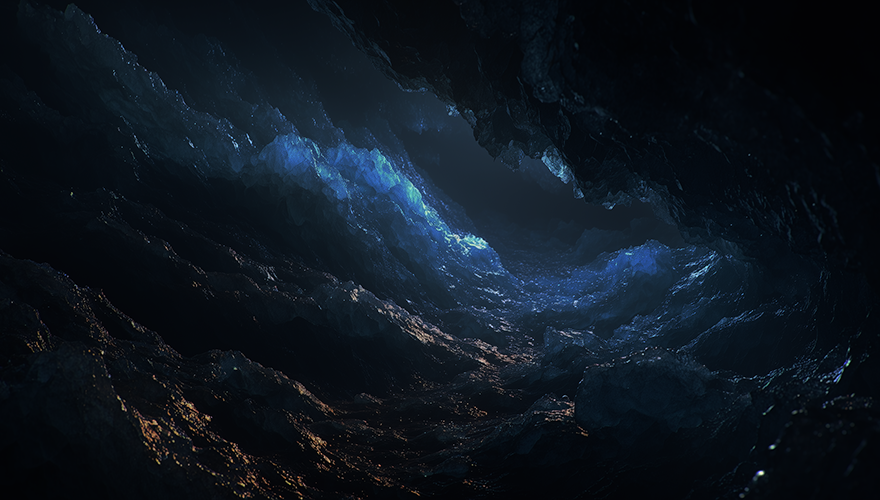
One of the most shocking aspects of Enceladus to early scientists pouring over probe data was Enceladus' apparent composition. They had expected a heavily ammoniated or methanated sub-surface, a blend of water and volatile organics. What they found- and confirmed a century later- was that Enceladus has a salty water ocean and while it has methane and ammonia, not so much to alter the oceans' chemistry. The water was also replete with organic compounds, including carbon and some building blocks for amino acids.
By Earth standards, Enceladus' gravity makes for water that is nearly stagnant. Its convection currents are based primarily tidal forces acting upon the moon, though some modern evidence suggests that radioactive carbon decay is happening in its core. There are no big storms in Enceladus' oceans, no major ocean currents. But there is "pull" as gravitational bodies approach and subside as the moon passes. These pulls stir up detritus and occasionally cause the release of methane and ammonia pockets in ice or from the ocean floor.
Enceladus' oceans are in direct contact with its rocky core. The core acts similarly to an ocean floor some five to fifteen kilometers below the ice. That depth is similar to Earth's deepest oceans. But with less than 3% of Earth's gravity, the water pressure is not particularly challenging.
Polar
Temperate Zone Warrens
Tropical Abysses
Beyond Fifteen Kilometers
Seismic and Hydrothermal Activity
Life
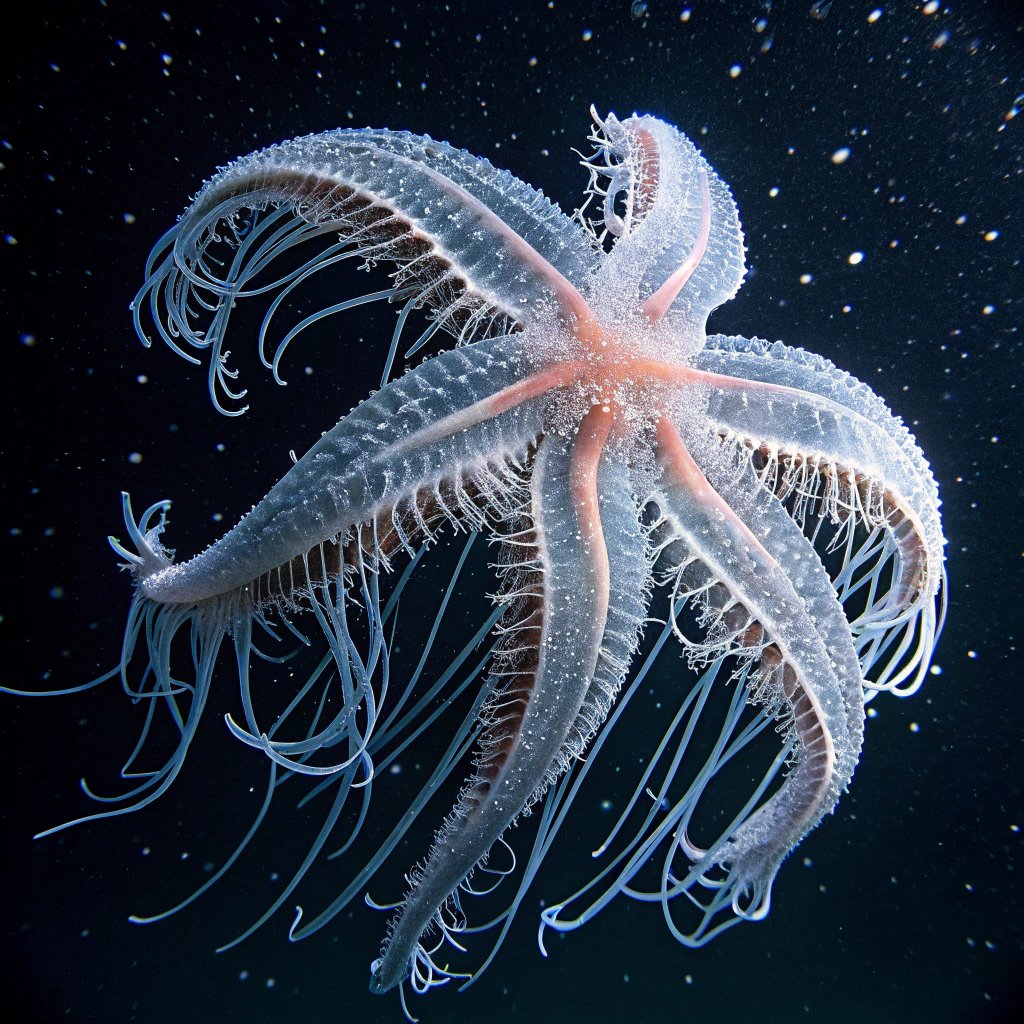
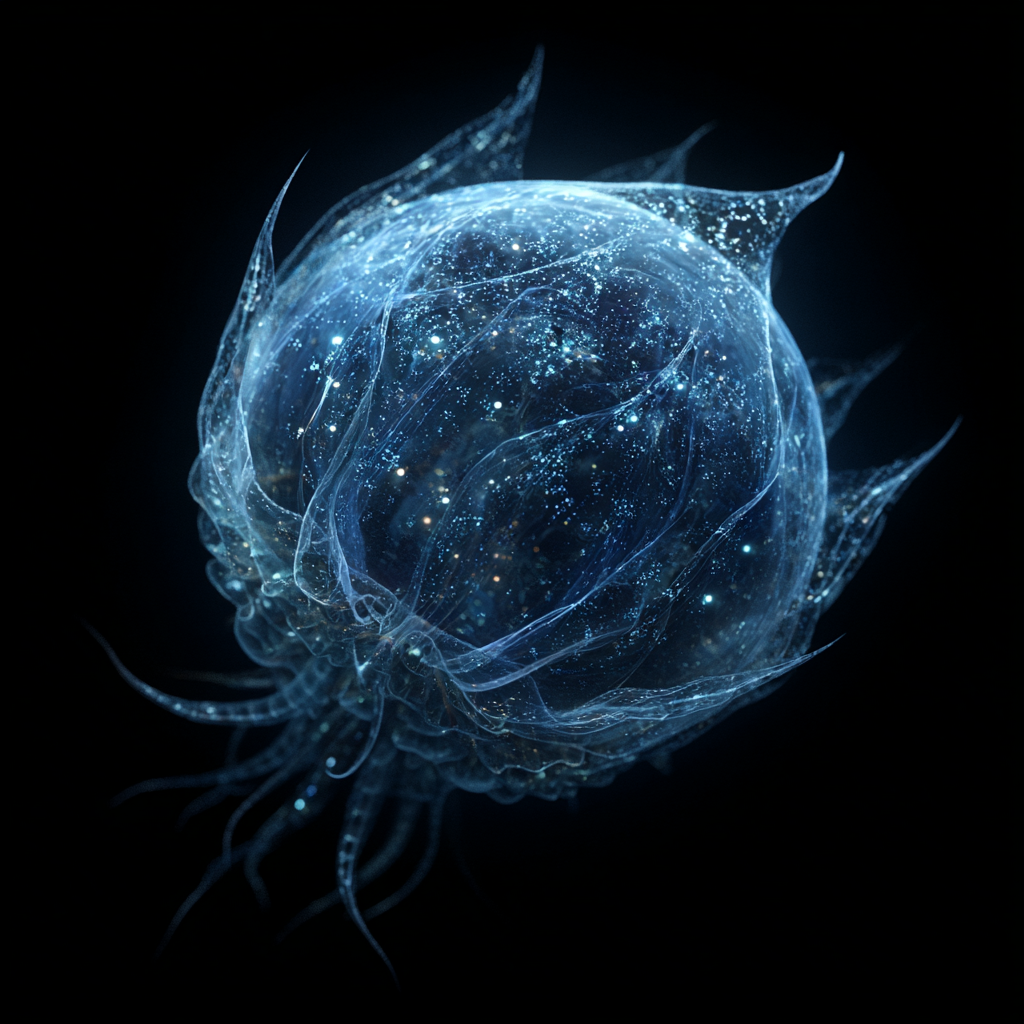
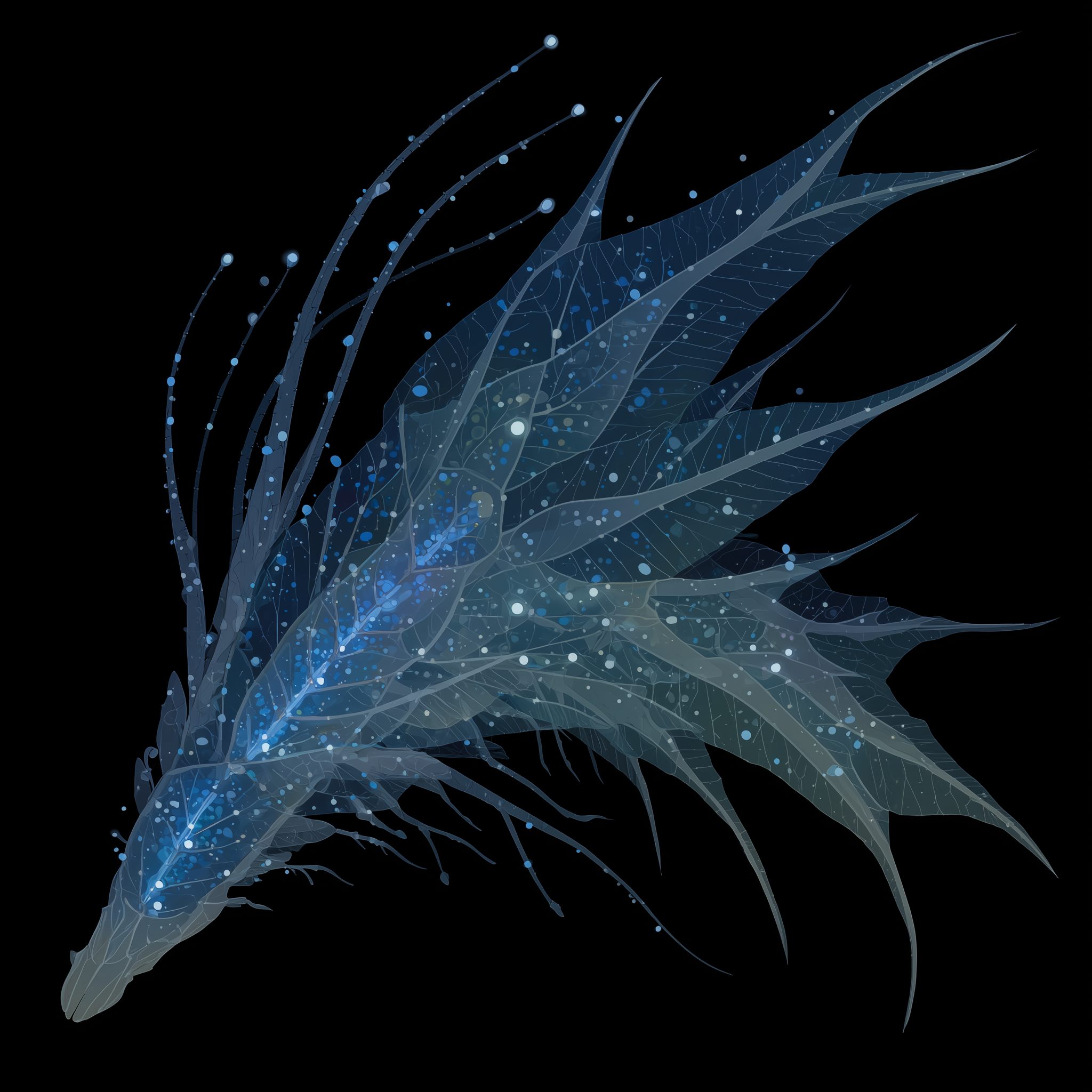
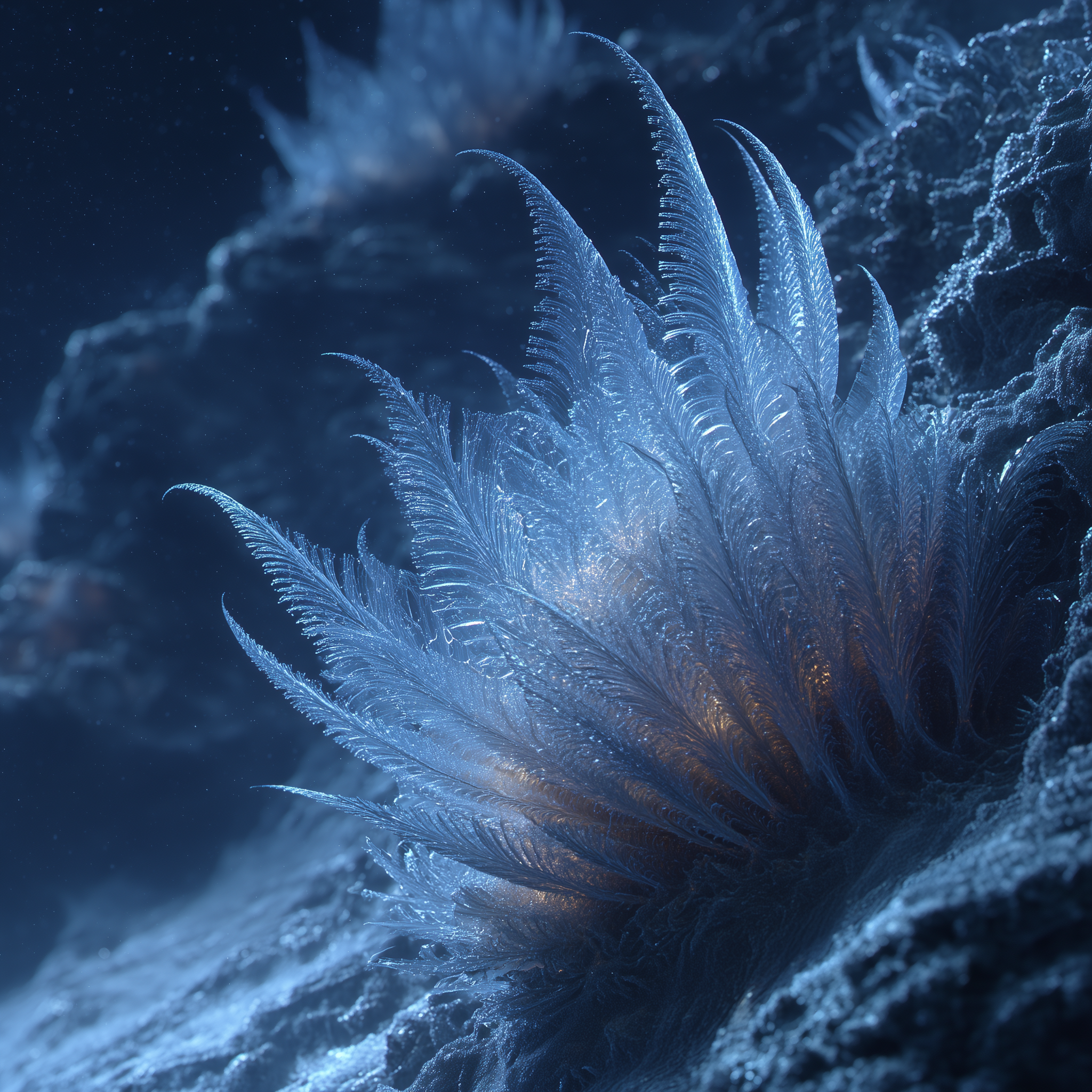
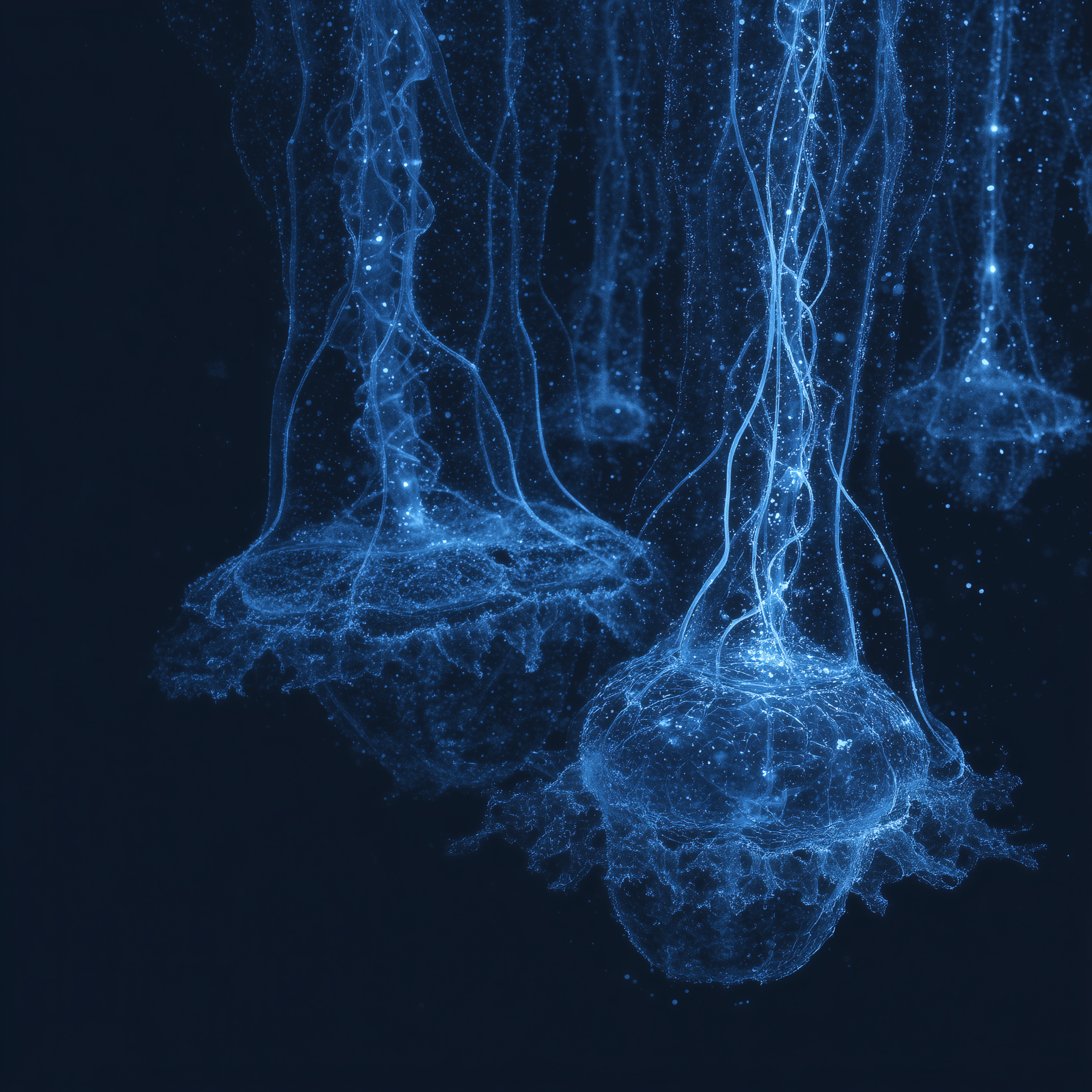
Enceladan life is primitive by Earth standards, primarily carbon-based, and usually methane-fixing for gaining energy. Most life on Enceladus engage in symbiosis with anaerobic archaeobacteria which provide sustenance in exchange for mobility and a sustainable life shell. The sun's energy does not penetrate this deep under the ice, but some life (which clings to the underside of the ice) does harvest radiation from Saturn.
Size and Diversity
Those hoping to encounter megafauna of gargantuan proportions will be mostly disappointed. There are no Enceladan Whales plumbing these lightless depths. In fact most life on Enceladus is smaller than the tip of a typical Human's pinky finger. A few might reach the size of a human's palm.
Structure and Symmetry
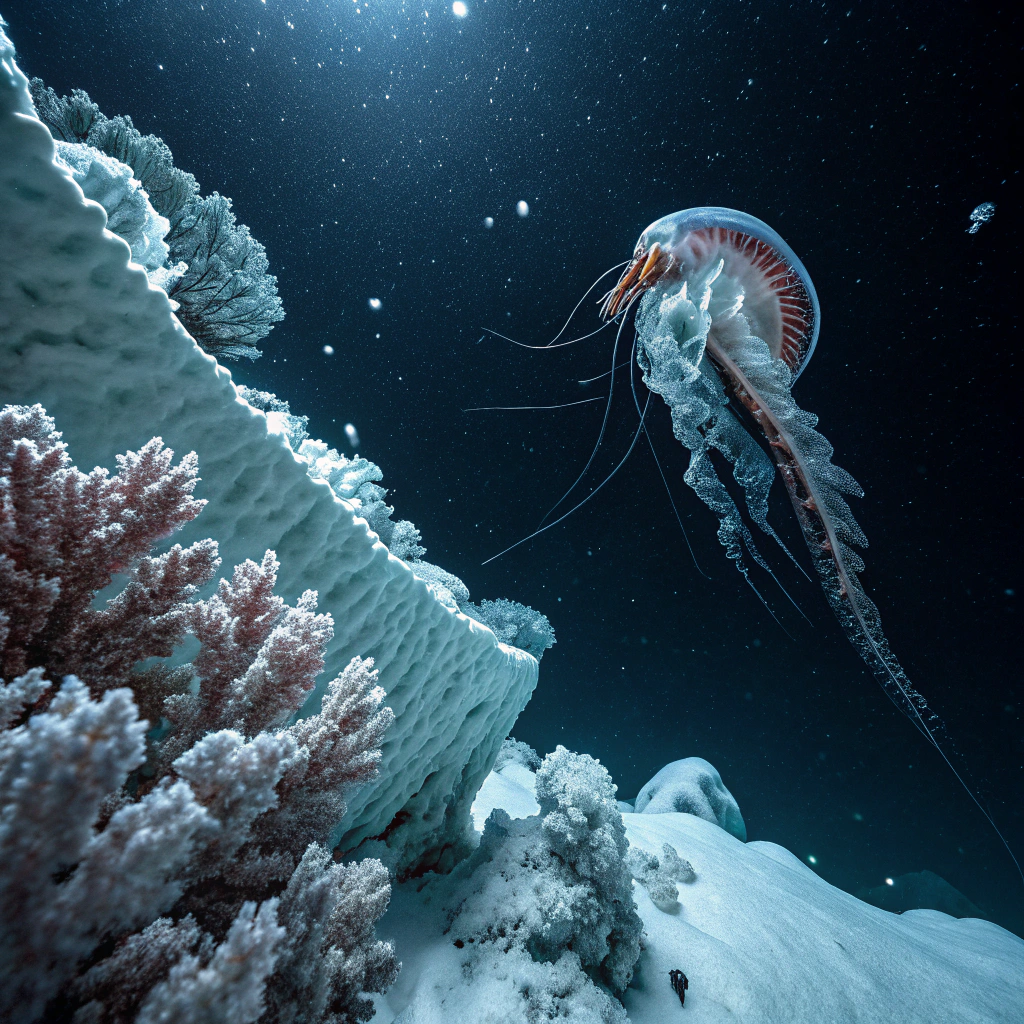
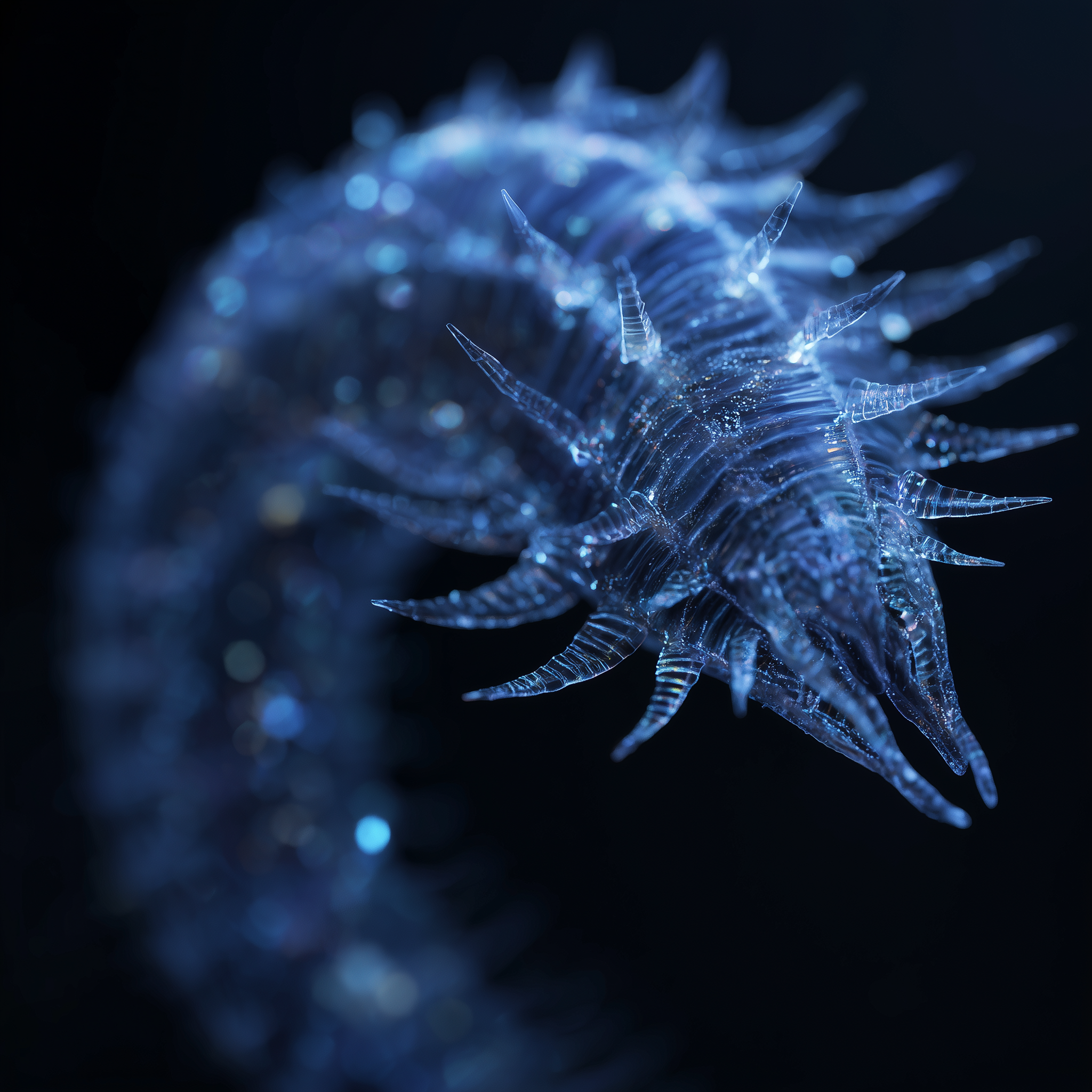
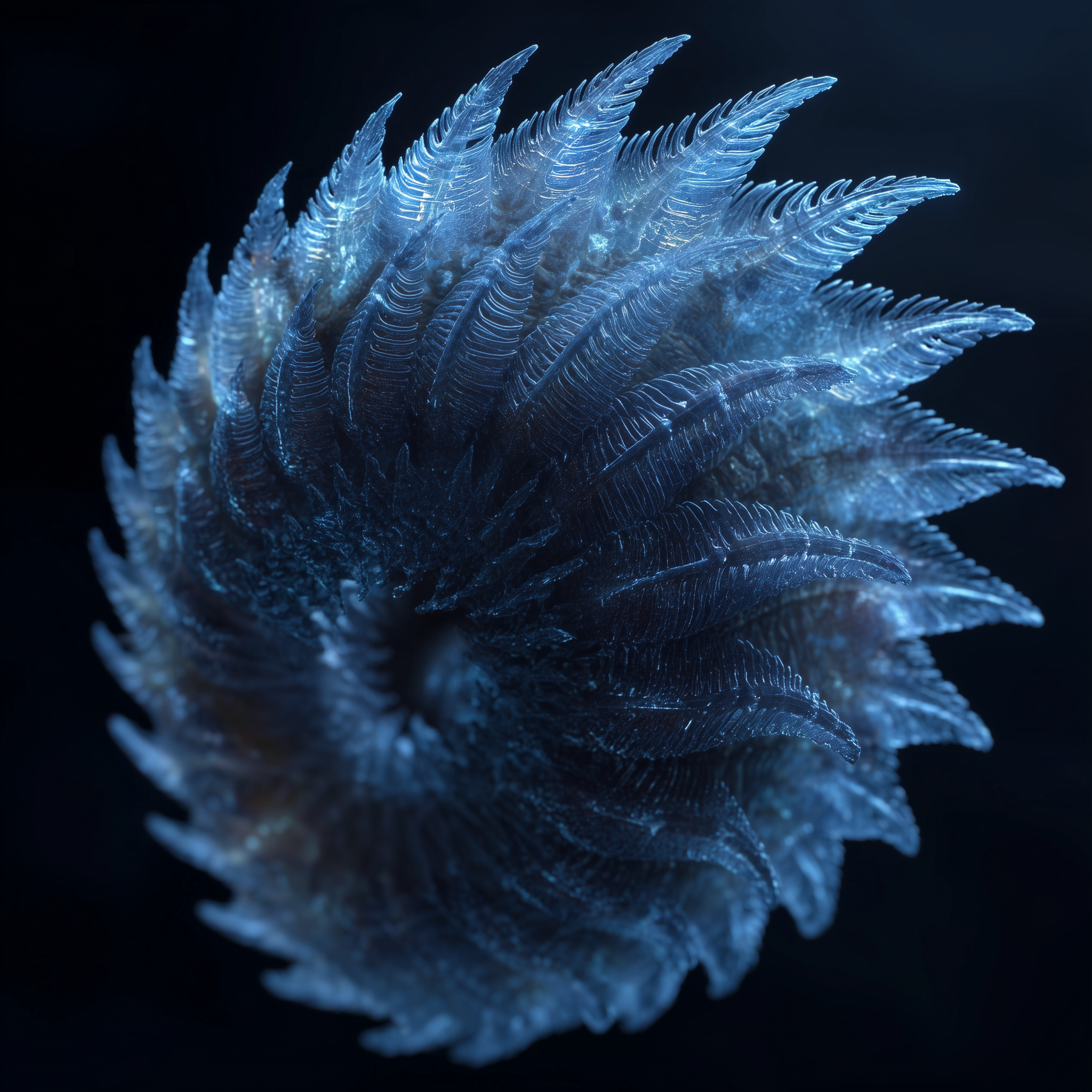
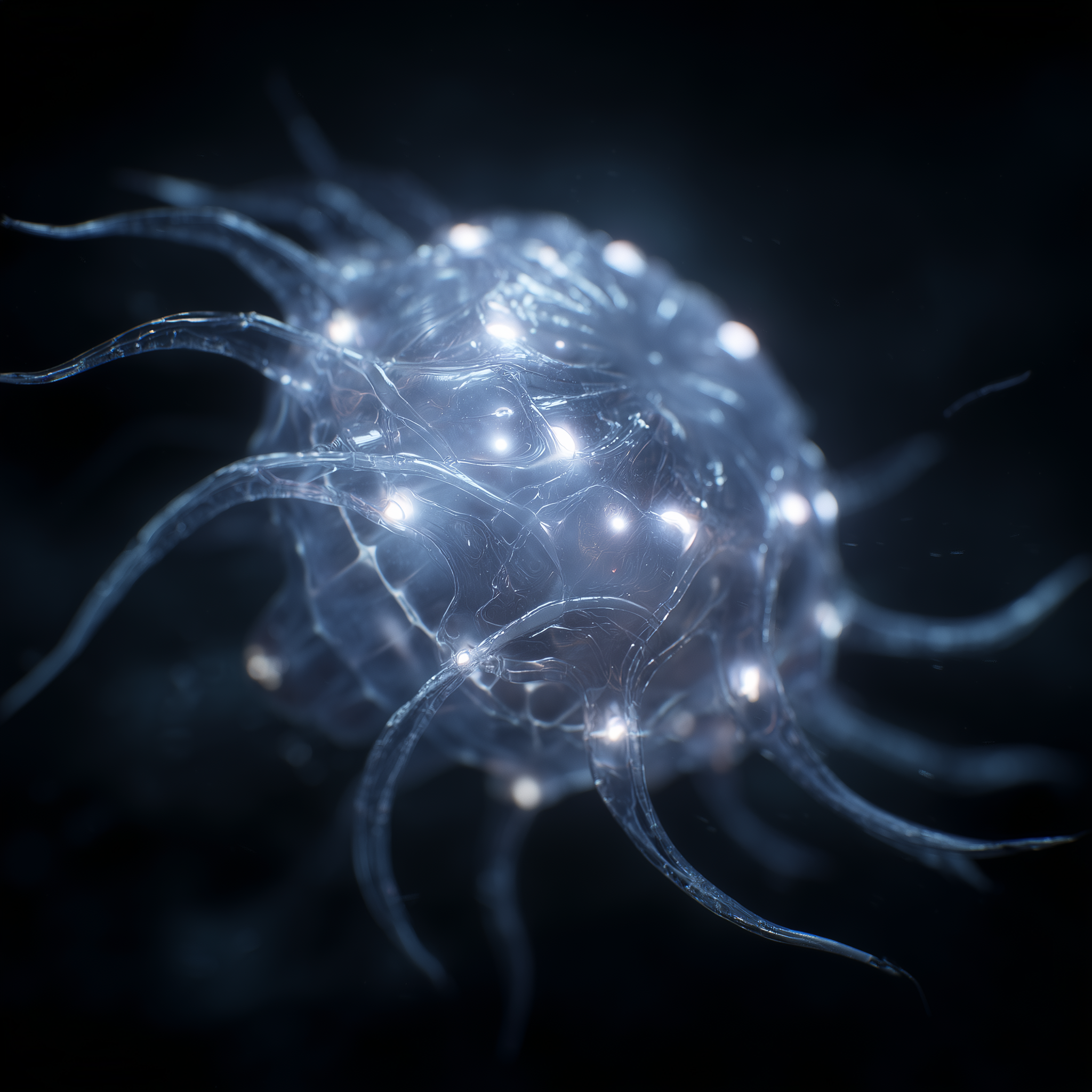
Enceladan life is exclusively invertebrate. There are no life forms that could be described as having bones or a uniformly rigid internal structure. As most Enceladan life will rarely if ever encounter a hard surface, their bodies are quite soft. Their structure is usually contained within a gelatinous sheath, or a sort of soft chitin.
Radial Symmetry
Most Enceladan life presents as radially symmetrical- they may be circular or spherical with the same features equally spread across the form. Some life- especially life that forms the few predators- are bilaterally symmetrical.
Biomes
Enceladus has five broadly identifiable biomes where life could potentially exist- though in reality their numbers are found most in four. These biomes are often regional
Undersea Glacial Ice and Glacial Pockets
Enclosed Sea Ice Caverns
Methane Gardens
Methane Plumes and Pockets
Sea Floor
Open Ocean
Smell, Taste and Touch
Enceladus is naturally a light-less environment. Thus, no known Enceladan life forms have eyes- they don't need them. Enceladan life relies heavily on detecting chemical changes in the water- particularly for methane and the breakdown of other organic molecules. They also have feelers for sensing vibration and movement- both for detecting food and safety. The waters of Enceladus are generally quite calm aside from thermal convection and seismic waves.
Equilibrium vs. Predation
Enceladus doesn't have plants. It's "producers" are colonies of bacteria that grow either in large colonies suspended in an ectoplasmic goo, or else grows within the life form. These "goo patches" are roughly equivalent to coral reefs or kelp forests on Earth and grow near methane pockets. In turn, these bacteria are harvested by life forms and sustained in the body rather than consumed. Since most of these bacteria are methane-fixing, they need sources of methane. Mobile life forms provide transport.
Colonial Transplants
Enceladan marine exo-biologists quickly determined the strange way life exists on Enceladus. Life is quite rare and confined to a few locations. It is not planet-wide. Mobile life forms- multi-cellular ones- exist to transport methane-fixing archaeobacteria to methane rich areas. En-route they sustain the multicellular creature. When methane deposits are located, the bacteria will "colonize" this new location. The colony may last weeks, months or years until the source either moves or is depleted.
When the bacteria needs to evacuate a methane region, they "scent" the water that attracts fauna to "feed."
Cultivation
Stranger still, when a new methane pocket is colonized, larger fauna will stay and cultivate or "guard" the bacteria as it establishes its mega-structure. In return the bacteria continue to feed the fauna. This strange, symbiotic "farming" technique for survival seems to be part of the default of animal behavior on Enceladus.
Scavengers
There are certainly predators on Enceladus- life that consumes other life. And they use the "goo patches" as a natural hunting ground. But they are quite rare. Scavenging- consuming dead life forms- is much more common.
Cultivation
Enceladan life is considered inedible to most species and there is no effort to cultivate it as a foodstuff. The amount of methane in the life forms often makes native life, as one Enceladan child once described, "smell like farts." The texture of Enceladan life would be equally unpalatable. Most of them are quite soft and gelatinous while others have a consistency of something like chitin made of a plastic bottle.

Enceladus Colony

Principal Settlements
Enceladus has two major colonial settlements and a group of unincorporated facilities and camps. The moon's entire population is less than 18,000 people. Most of the colonists are Human.
Eilat Hub
Victoria District
Erebor District
The Drop
Eilat Anchorage
Hatch Sector
Unincorporated
Surface Observatories
Bathyscaphes
Bright
 Located on the anti-Saturn pole in the tropical zone, Bright is an installation that combines sub-ocean facilities and facilities bored into the Enceladan crust. It has access to Enceladus' surface via a rapid transit lift system.
Bright is nominally under the umbrella of the Daystrom Institute and is one of the principal theoretical engineering groups that design the Federation's and Starfleet's computer systems. It also was heavily invested in creating and studying artificial intelligence. Though it was not their primary facility, Bright frequently hosted Doctors Bruce Maddox and Altan Inigo Soong. Several teams dedicated to Soong-type android research left for the Ghulion system after the ban. Others petitioned Enceladus' scientific community to fight the ban.
Bright Thinktank is a powerful entity on Enceladus, and one seen as for the good of humanity but most Enceladans. Enceladans are un-apologetically for the (sometimes unfettered) advancement of science. Bright, in return, assures very Enceladan has access to computer technology, usually 3-5 years ahead of the Federation as a whole.
During the era of the Synthetics Ban from 2385-2399, refused to work for Starfleet and cancelled many contracts with Starfleet's Corps of Engineers. These were hard years on Bright and as they emerge into a post-ban present, they are a smaller company with more competition.
Memor-E
 Memor-E is a cooperative facility between Enceladus Colony's resident scientists and engineers, the United Federation of Planets' Archive Library and Memory Alpha. Technically the facility is under the jurisdiction of the Federation Archives, but in practice most of the archivists come from Enceladus and Titan.
During the Dominion War, Federation archivists and their Starfleet counterparts were concerned that the Cardassian-Dominion-Breen Alliance could easily cripple Memory Alpha. They moved to diversify and back up Memory Alpha in a number of locations. Memor-E is one such repository. It is not as vast as Memory Alpha but it does contain the sum total of data- but it is inactive and in archived record form.
Foundation
Starting Over
United Republics of Canada, Québec and Nunavet
While Canada weathered the Eugenics Wars and American Second Civil War mostly intact, they looked on with unease and considerable national division on what was happening. There was thankfully no Augment warlord "prince" that seized Canada, as most of those wars took place in Asia, Africa, the Middle East and South America.
They were not spared Colonel Green's Optimist Pogroms, culminating in Green's Optimists invading Canadian territory. Canada's resources ultimately collapsed when World War III escalated in to a nuclear conflict. The ensuing nuclear winters were devastating.
Autonomous State of Punjab
Confederacy of Pakistan
Israeli Dissident Movement
Kurdish Cultural Preservationists
Colonial Charter and the Fundamental Rights of Sentient Beings
Colonial Anthem
Political Structure
Enceladus borrows heavily from the Outer Worlds Commonwealth political model, while trying to further minimize social stratification in favor of expertise. Enceladans prefer "facilitators" to "leaders," though they recognize greater education and experience in a given field should be given weight in a thinktank or action committee. But in general no one voice should have veto power over other contributors.
Enceladus does have a system of external interface- called Speakers- pulled from the Commonality to address questions about proposed laws. Speakers usually write "critical analysis essays" rather than give actual speeches. These critical analyses are publicly available in total.
Political Philosophy
Enceladus is not a true Anarchy, nor a true Democracy but it does believe in communal resources and a liberal charter of Sentients' Rights- which they have extended to include Infolife/Photonics, and Artificial Life Forms.
The root belief of Enceladan governance is that all sentients (including children to a degree) can contribute to forming new laws (called initiatives)- as long as they can contribute to crafting that initiative as a relevant expert in the field. Enceladus has a tradition of meritocracy- a reasonable review of credentials and experience in order to join specific action committees crafting an initiative. If an individual does not meet that knowledge threshold they are invited to be Observers and can ask questions, but they cannot vote to table or pass an initiative.
Judicial Feasibility Threshold
The JFT is an automated process carried out by local AI. An "Initiative Proposal" is submitted to the AI which will automatically check for ambiguities, statements or language that could potentially violate the Fundamental Rights of Sentients clause in the colonial charter. Any proposals that would contradict this body of laws is automatically rejected. Thus bills that would frivolously change law have a low chance of passage.
Initiative Revision
Judicial Feasibility Threshold Appeals
Commonality Thinktanks and Action Committees
Expert Review and Revision
Political Blocs
Enceladus has not solved the great evil of partisan politics any better than other governments. They are not outright banned (as that is against the Declaration of Sentients' Rights under Freedoms of Assembly, Protest and Speech). But it is explicitly written in the colonial charter that political organizations cannot petition for colonial resources, media time or take "personal contributions" from inside or outside the colony, as it excludes the rest of the Commonality and is therefore unequal.
Still, they do informally exist and they do meet to try and turn action committees and thinktanks by inflating their expert testimonials in the fact-finding stage.
Political Timeline
The Enceladan political process is notoriously slow and, some would say, clunky.
Ongoing Challenges
Gravity
Seismic Activity
Policy Disagreements with the UFP
Culture
Enceladus was founded by Intelligentsia from around Earth who wished to start with a blank slate as the planet emerged from the post-atomic horror era. Many had ancestors who had been eliminated or "disappeared" by the Optimist faction, by Ultra-Nationalists who scapegoated science or learning, Historical Revisionists and by Augment warlords. Many who went were exiled from their ancestral lands because of nuclear annihilation, catastrophic climate change or political pogroms.
A Colony of Introverts
Art and Music
Education and Trade
Cuisine
Faith Practices
Collectivism
Pacifism
Vegetarianism and Veganism
History
Early Years
Joining the Outer Worlds
Recent Events
Federation Total Synthetics Ban Act of 2385
No comments to display
No comments to display